
We all know high-fidelity audio is not exact maths. It is as much about psychoacoustics and our own perceptions as it is about maths and science. In the end, what matters is how the music feels to you, the listener. If it tugs at your heartstrings, nothing else matters.
But not every system can strike a chord with the listener (pardon the pun). The journey to your ideal system can be long, costly and at times frustrating. Harder still is finding a system you can grow into, one that keeps up as your musical taste evolves and new gear comes along.
So where should you start?
The theory of constraints
The theory of constraints says that the throughput of any system is limited by its weakest link. A Hi-Fi system is a chain too, and the music can only be as good as the weakest component it passes through:
· For a digital system: Digital source → DAC → Pre-amp → Power amp → Speakers
· For a typical analogue system: Turntable → Phono stage → Pre-amp → Power amp → Speakers
Look at the start of each chain and you will notice the source varies. Many of us own several: CD players, tape decks, PCs, laptops and Roon Cores. Source and amplifier technology also moves quickly. New products arrive almost every month, and each generation tends to be better than the last.
Now look at the end of each chain. There is one constant: the speakers.
Speakers first, always
Imagine you have just bought a new streamer with rave reviews on 6moons and the StereoNET forums. You can’t wait to hear it. But after ten minutes of hooking it up, you hear very little difference. Chances are the problem lies downstream. Your speakers are not revealing enough to convey the micro-details of the music: the overtones and the transient attack of each note.
Speakers are the last leg of the chain. This is where the electrical signal carrying the music is finally turned into physical vibration, the sound you actually hear. The moment of truth comes when your speakers sing your favourite track. Modern streamers and amplifiers already achieve extremely low distortion figures, while even good speakers still measure distortion in the single-digit percentages.
That makes the speakers arguably the single most important component in a hi-fi system to get right. They can easily be your limiting factor and you never want that to be the case.
Choosing speakers first also makes sense as an investment. Speaker technology moves more slowly than streamers or DACs, so the risk of being superseded tomorrow is low. A good pair of speakers should last decades, while the electronics around them come and go.
What makes a great pair of speakers?
· Transparency. They deliver the true sound of the components upstream, adding very little colouration of their own and letting the music play through in full.
· Versatility. They are not fussy about music. A great pair handles a wide range of genres, and the occasional movie night too. If a pair of speakers only sounds good with vocals or violin, chances are they have built-in limitations.
· Adaptability. They adapt to your room, especially in resonance control and bass performance, so they sound right in a real home and not just a showroom.
· Room to grow. They reveal every upgrade you make upstream, so your system can keep improving around them.
Speakers like this are hard to make. They require mastery of several disciplines and years of refinement and experimentation. Harder still is producing a big sound within a limited space. Gauder Akustik speakers are a prime example of what is possible.
Gauder Akustik speakers
Dr Roland Gauder, a physicist by training, has been designing speakers for more than two decades, first for Isophon, including the Europa II, and since 2012 under his own Gauder Akustik name. He describes his approach as science rather than philosophy: calculate, build and test. Every Gauder speaker starts as a mathematical model of the whole system (drivers, cabinet and crossover), and every part is designed for that one model. The result is a set of technologies that challenge conventional speaker design. Here’s why they matter:
1. Very steep crossovers remove the speaker’s own sound
Gauder’s trademark is its unusually steep crossover filters, from more than 50 dB per octave on the Elargo series to 60 dB per octave on the flagship models. Most speakers use around 12 to 24 dB per octave. Gauder also builds its crossovers symmetrically, doubling the parts count so components sit evenly on both the positive and negative side of each driver.
Why go so steep? As Roland Gauder has explained to The Absolute Sound, hard driver materials such as ceramic and diamond have resonances that must be cut off completely, and gentle filters cannot do that. Steep filters also stop neighbouring drivers from overlapping in the crossover region, so each frequency comes cleanly from one driver in its low distortion bands, with more clarity and dynamic headroom, especially at higher volumes.
With those resonances gone, and each driver working in their happy frequency bands, very little speaker colouration is left to blend with, or hide, the character of your upstream components.
2. Time Delay Control gives precise timing and imaging
Steep crossovers introduce small timing (group) delays, and the tweeter and midrange voice coils also sit at slightly different distances from your ears. Left uncorrected, these smear the leading edge of each note. Gauder’s Time Delay Control (TDC) circuit delays the tweeter by exactly the right amount, so all drivers launch each transient together. The result is a precise impulse response: the strike of a drum or the pluck of a string arrives intact, with no smearing or softening.
3. Rigid drivers and cabinets mean low stored energy
Gauder believes in very stiff cabinets. In the flagship DARC series, stacked aluminium ribs (or Rib Construction, RC) with damping material between them minimising the cabinet’s “bell” ringing. The Elargo series takes a different route to the same goal: a teardrop-shaped cabinet made from thick, heavily damped, internally braced material that keeps vibration out of the music.
Gauder builds its own drivers. Its XPulse drivers are customised to Gauder’s exact specifications for each model, with ultra-stiff aluminium diaphragms that start and stop quickly. In the Elargo 200, that means a 7-inch aluminium midrange and two long-throw 22 cm aluminium woofers, paired with a beryllium tweeter that can be upgraded to diamond.
With rigid drivers and cabinets, your amplifier’s transient speed, decay and micro-dynamics pass straight through, without the speaker smoothing them over.
4. Load-revealing: they show what your amplifier can really do
Steep passive crossovers use many reactive parts (coils and capacitors), which makes the electrical load complex. On the Elargo 200, the Bass Extension setting adds up to an octave of deep bass by lowering the impedance of the bass system, so the speaker draws more energy from the amplifier.
So the speaker shows more than tone. It shows how much current, power supply reserve and bass control (damping) your amplifier really has. A strong amplifier sounds effortless and grips the bass. A weaker one sounds strained or soft. The upside for you is that every amplifier upgrade is heard, which is exactly what you want from speakers you plan to keep for decades.
5. Adapting to your room
Every room treats bass differently, and the Elargo 200 gives you two separate systems to tune it:
· Adjustable bass level. Jumpers set the bass level in three stages (−1.5 dB, 0 dB and +1.5 dB) across 22 to 144 Hz, so you can lift or trim the overall bass to suit your room.
· Bass Extension. Plug-in Bass Extension Modules fine-tune the deepest bass between 30 and 60 Hz, the lowest octave, in six steps from 0 dB up to +4 dB.
Together they give you plenty of levers to pull, whether your speakers sit close to a wall, out in a large open-plan room, or you simply like a little more weight in the low end without needing to invest in/ finding the space for a subwoofer.
6. Craftsmanship
The Elargo's teardrop-shaped cabinet is beautiful from every angle, and the same shape helps keep unwanted vibration out of the music. Each Elargo cabinet is finished in high-gloss piano lacquer in Black, White or Rosewood, with no extra charge for any finish. Every pair is hand-built by experienced craftsmen at Gauder's workshop in Renningen, Germany.
Built for life
Put all this together and you get speakers that are transparent and revealing, fast, coherent and holographic. Most importantly, they convey the subtle micro-details and overtones that so often carry the emotion in music: the breath before a vocal line, the decay of a piano note, the texture of a bow on a string. That is what brings you closer to the performance, and what tugs at your heartstrings.
The Absolute Sound’s Andre Jennings heard exactly this in his review of the Elargo 200. He found it did not lay a common signature over every recording. On Harry Belafonte’s Belafonte Sings the Blues, he could easily hear that the songs were recorded in two different studios. Voices such as Shirley Horn’s and Lisa Gerrard’s gained solidity and presence while keeping each singer’s unique character, and he called the Elargo 200 “an all-around performer that plays at a very high level”.
Speakers of this calibre suit the system you have today and leave plenty of room to grow. Eva Cassidy’s smooth ballads, Billie Eilish’s genre-bending pops, a full symphony orchestra in your lounge room, a high-dynamic movie soundtrack on a Friday night: they handle it all. No wonder Gauder speakers are built for life!
Listen for yourself
Angelic Sound is now home to a pair of Gauder Akustik Elargo 200 speakers with the upgraded diamond tweeter. The Elargo 200 was reviewed by The Absolute Sound in May 2026, and our pair featured in the Angelic Sound room at the 2026 StereoNET Melbourne Hi-Fi & AV Expo, which StereoNET described as delivering “some of the best sound at the show.”
The Absolute Sound’s advice was simple: audition a pair, and if you like what you hear, there’s a good chance they’re the speakers you’ll take home. Book an appointment and hear for yourself why these speakers are built for life.
To mark the reintroduction of Gauder Akustik back to the Australian market, Gauder speakers are currently offered at introductory Australian launch pricing, available until 31 January 2027.
Explore the Gauder Akustik speakers range here.
Book a private audition here.
Further reading
Jennings, A. (2026, May 30). Gauder Akustik Elargo 200 loudspeaker. The Absolute Sound.
https://www.theabsolutesound.com/articles/gauder-akustik-elargo-200-loudspeaker/
StereoNET. (2026). 2026 StereoNET Melbourne Hi-Fi & AV Expo report.
https://www.stereonet.com/features/2026-stereonet-melbourne-hi-fi-av-expo-report
Gauder Akustik YouTube channel: https://youtube.com/@gauderakustik-channel
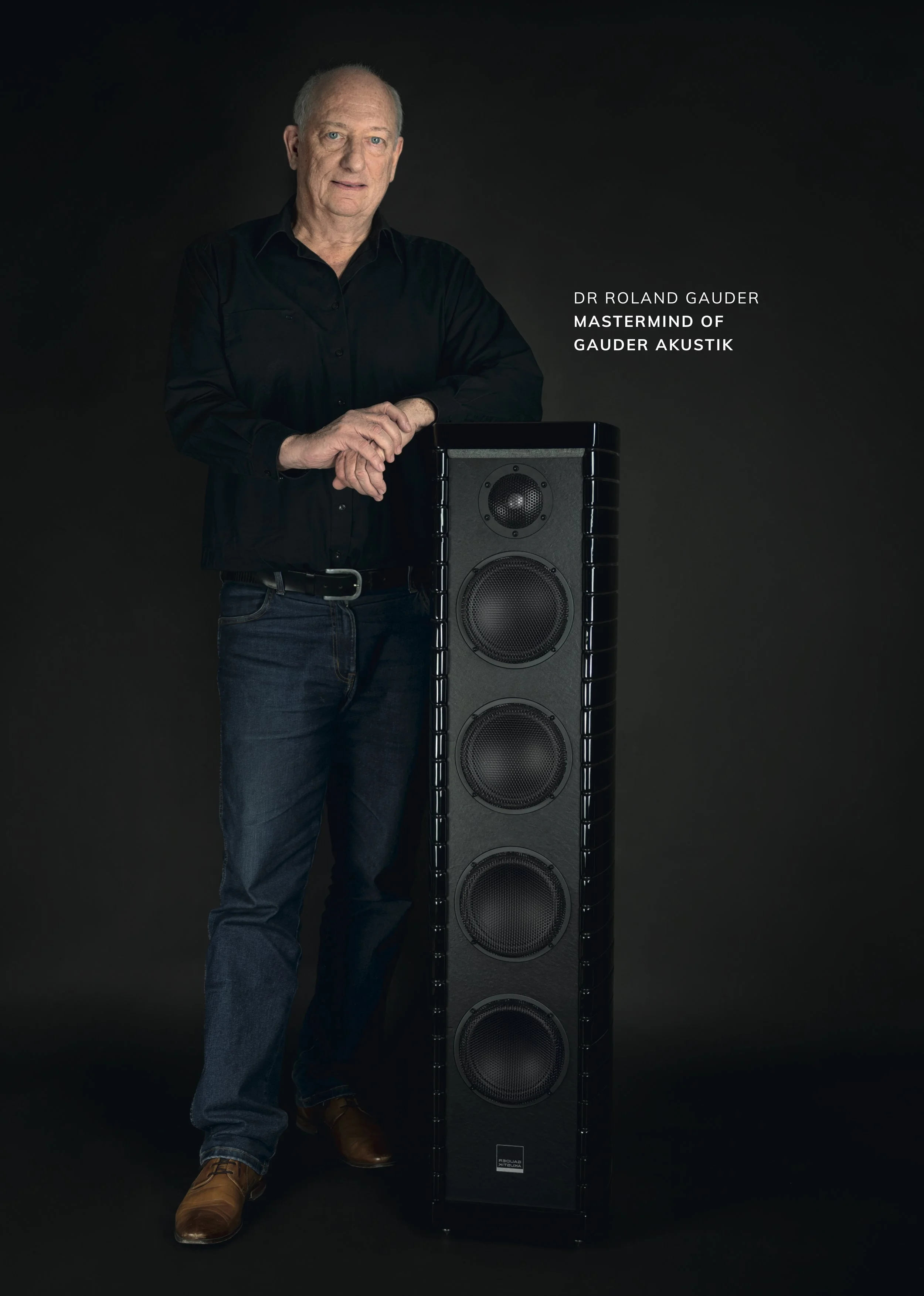
Dr. Roland Gauder with Berlina series speakers
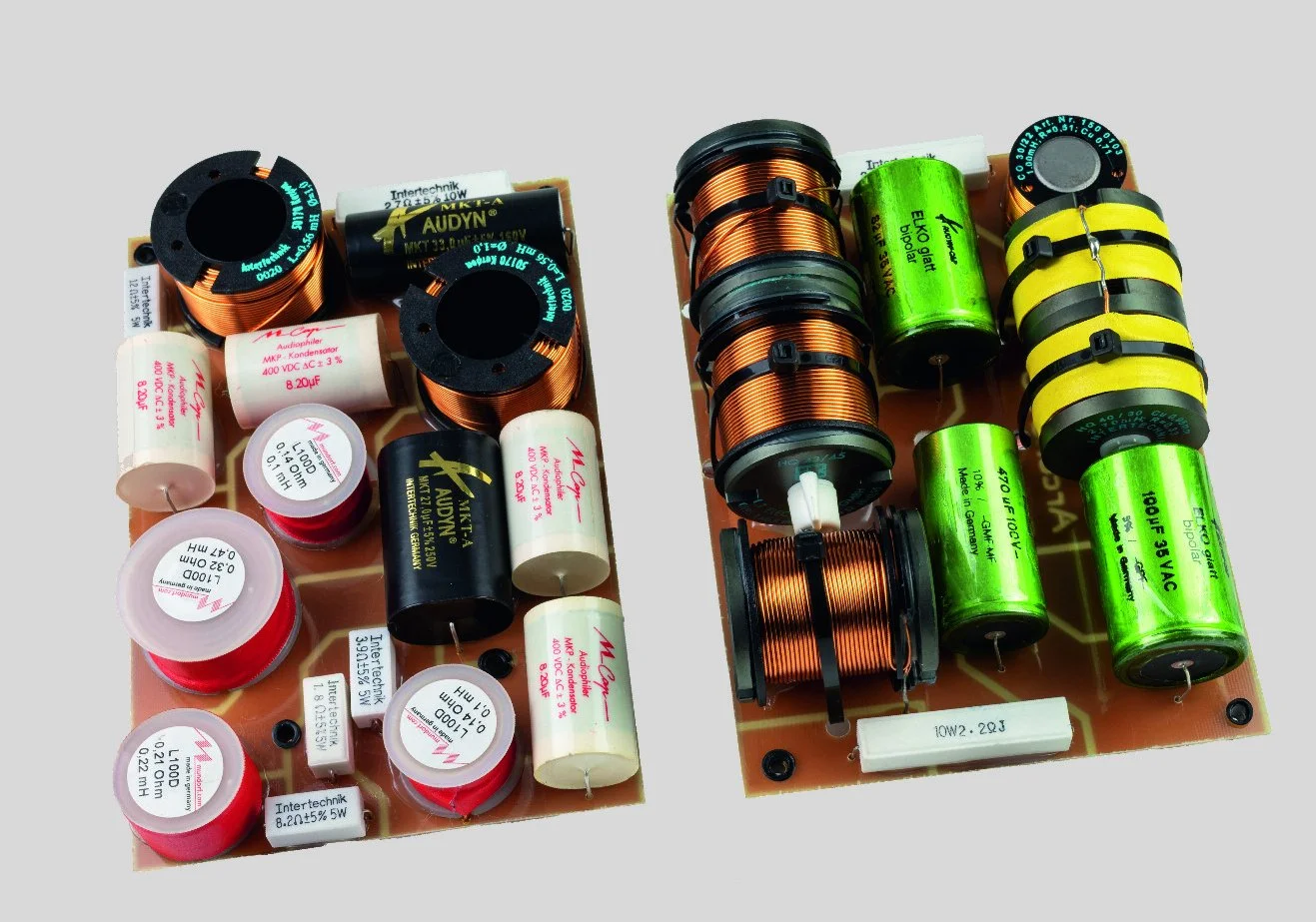
Crossovers

Aluminium Rib Construction
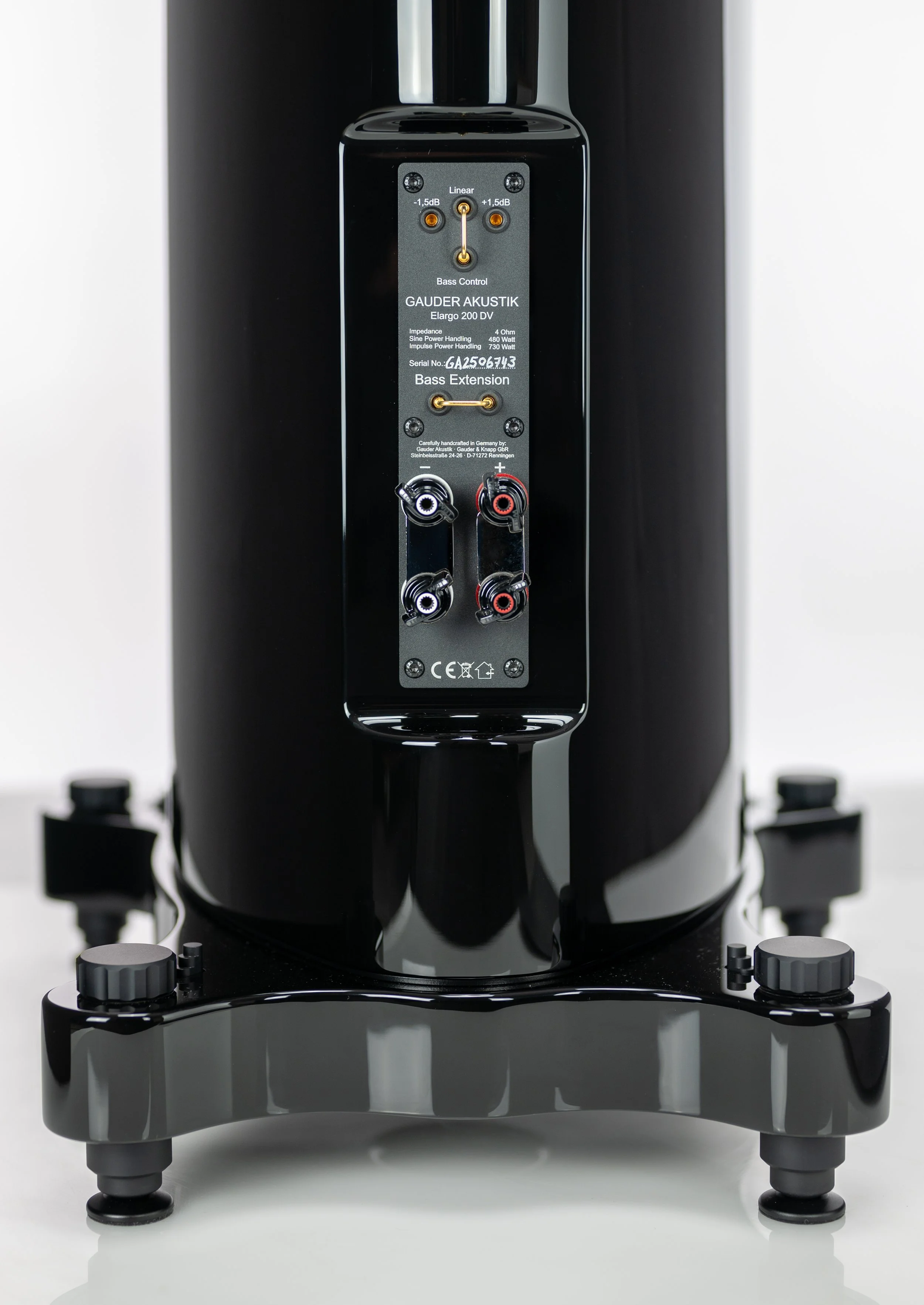
Elargo 200 Terminal
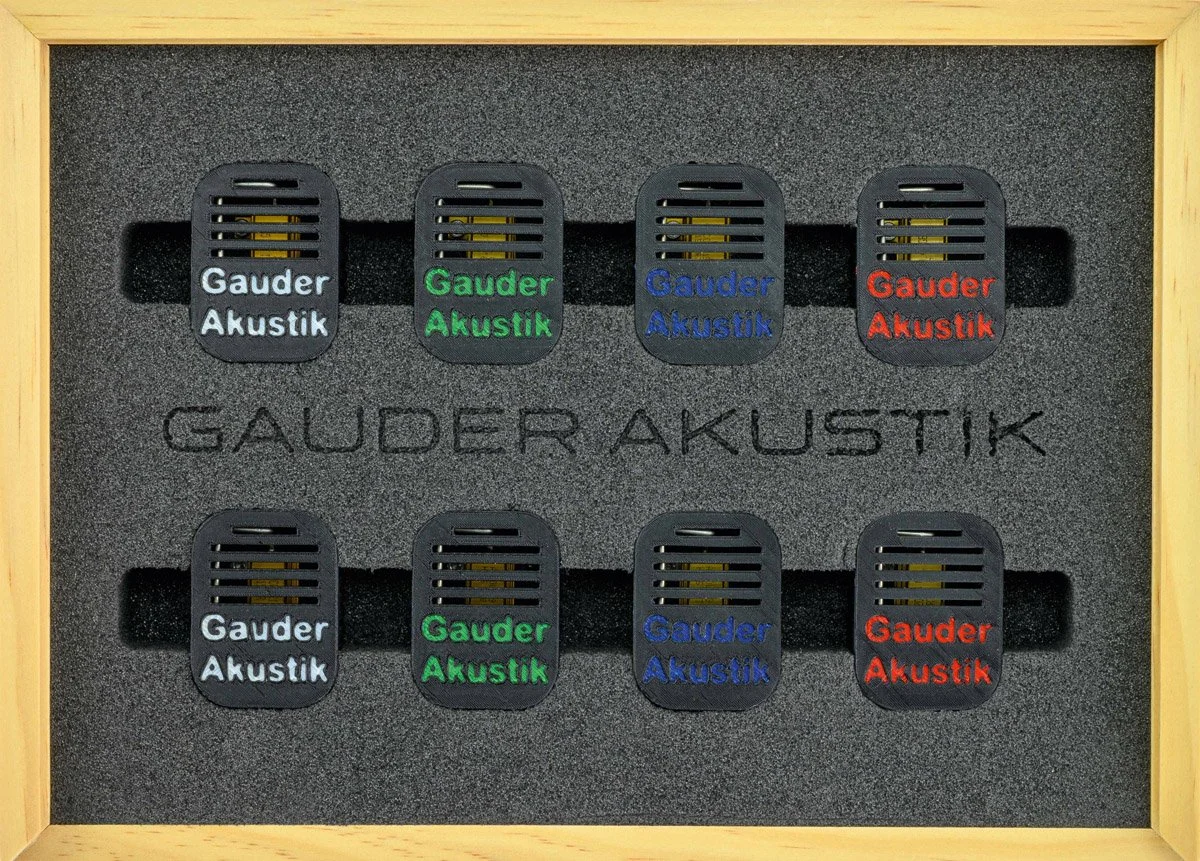
Base Extension Modules (Jumper: +4 dB, White: +3.5 dB, Green: +3 dB, Blue: +2 dB, Red: +1 dB)
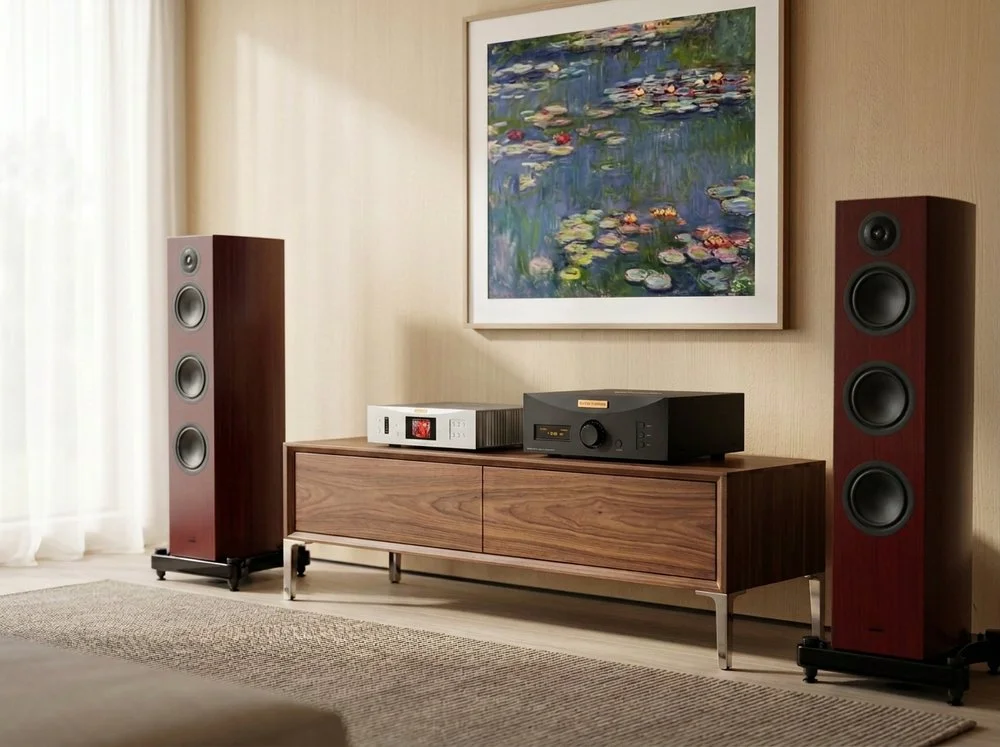
Elargo 200 with Cen.Grand GLD1.0 and Maxwell 909
